
The SMG Archives and Outreach Events: A Contribution to the York Catholic History Day
In previous posts, I have spoken of the role of the archivist in engaging with a variety of audiences, in order to share information, to encourage dialogue and research, and hopefully to inspire enthusiasm and inculcate a greater knowledge of the SMG archives. Through presentations at conferences and seminars, a wider group of individuals can share in the SMG history, and in the richness and diversity of the heritage collections. A standard feature of these events nowadays is a PowerPoint presentation, which permits the sharing of images from the archives to enhance and add interest to the story.
I was very grateful therefore to be invited last year to contribute to a conference at the Bar Convent in York, the annual York Catholic History Day, which took place on 14th June. The event originated 1996, under the leadership of Judith Smeaton, a former Acting County Archivist of North Yorkshire, and a stalwart of the Catholic Archives Society. This event, however, comes under the aegis of the Catholic Record Society, an organisation established as long ago as 1904 to encourage and promulgate scholarship about Post-Reformation British Catholicism. The range of subjects which has been addressed over the years is wide, though there is a particular focus on the Catholic history of York, and more generally on Catholicism in the north of England.
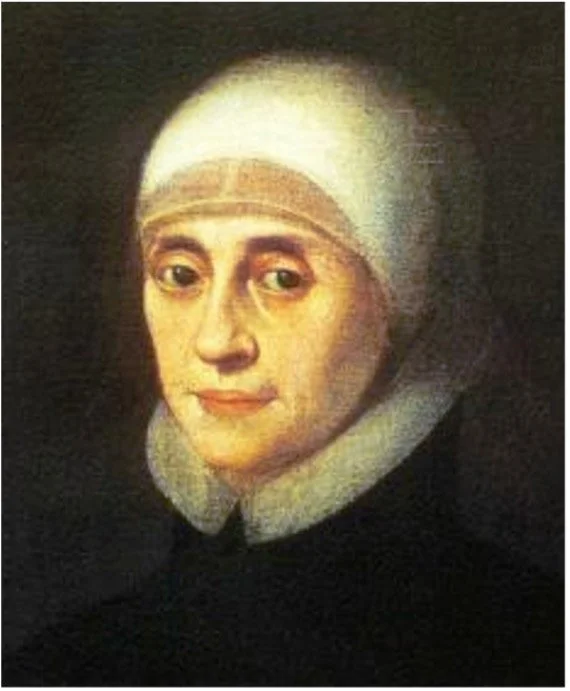
Sister Mary Ward
The venue of the event is an extremely attractive one, with a unique history. Established in 1686, when Catholicism was still proscribed by the British state, the Bar Convent is the oldest constantly functioning convent in the UK. The order which occupies and maintains this beautiful Georgian building was founded by Yorkshire woman Sr Mary Ward (1585-1645), and for many years the community was primarily involved in schooling. Formerly the Institute of the Blessed Virgin Mary, it is now known as the Congregation of Jesus. Like Venerable Mother Magdalen Taylor, the SMG foundress, Mary Ward was inspired by Ignatian spirituality, one of the keystones of the expansion of ‘apostolic’ or active orders of women religious, of which Sr Mary was a pioneer. The order came to Ireland in 1822, and this branch was commonly known under the name of the ‘Loreto Sisters’: many schools and colleges around the world now go under this title. St Teresa of Calcutta initially entered with the Loreto Sisters, and was trained in the religious life at their former headquarters at Rathfarnham Abbey in Dublin.
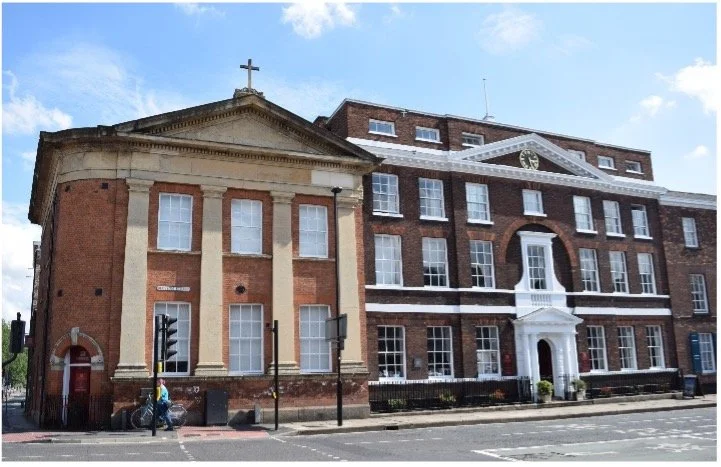
The Bar Convent, York
Our host for the day was Dr Hannah Thomas, Special Collections Manager at the Bar Convent, and she has a fascinating collection of archives, artefacts and rare books under her care. There is a beautiful and extensive exhibition in the convent, the Living Heritage Centre, which is a must-see for anyone interested in the history of the religious life, or of Catholicism in York. At lunchtime there was an opportunity to visit the heritage centre and see the rediscovered ‘Arma Christi’ scroll, on display in the new Treasures Gallery. This is one of a very few surviving illuminated medieval manuscripts portraying the iconography of the instruments of Christ’s passion, in combination with a prayer poem to the ‘Vernicle’ or Veronica, the image of Christ’s face miraculously imprinted on a piece of cloth. It is interesting to note that Mother Magdalen herself had a great veneration for the ‘Holy Face’ of Jesus, a devotion which came to fresh prominence in late nineteenth-century France.
My presentation had for its subject matter the work of the Poor Servants of the Mother of God in the Archdiocese of Liverpool. This is a work with a very long history. The SMG congregation first entered the archdiocese in 1882, at the invitation of the Jesuit community of Holy Cross parish in St Helens. The following year a house was opened at Hardshaw Hall as the ‘Providence Free Hospital’. Despite the misgivings of some of her supporters, Mother Magdalen realised that the greatest need in the town was for a hospital, which was in operation for almost a hundred years. The origin of the works in central Liverpool lies with a refuge for vulnerable women opened in 1891, at the urgent request of the famous Father James Nugent. It was re-opened as the Lourdes Hospital in 1929, eventually transferring to another site on the Greenbank Road, until it was sold in 2006. It was here that Archbishop Derek Worlock spent his last illness, he who had described the SMG Sisters as ‘precious jewels in the life of the Church’.
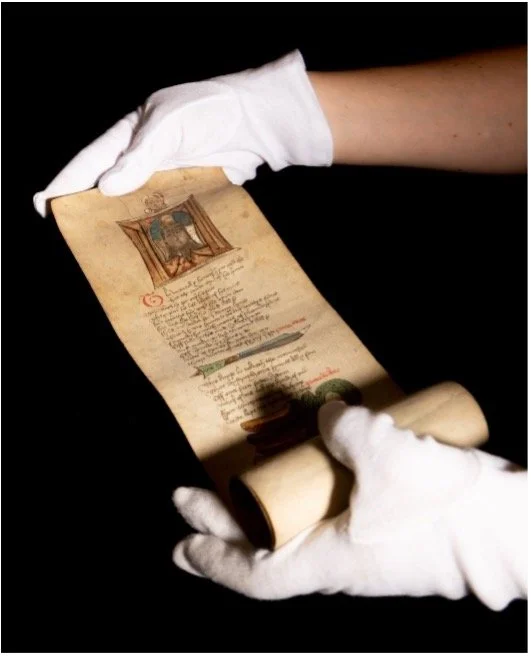
The ‘Arma Christi’ scroll
The Sisters’ caring works have been astonishingly varied, during the approximately 143 years during which they have served in the diocese, taking in nursing, pastoral work, refuge work, prison visiting, education, support for families, and residential care of children and the disabled, and
it was very difficult to compress an account of these activities into a 45 minute presentation! I was pleased to be able to end with a quotation from Archbishop Downey of Liverpool, in which he captured something of the spirit of the work: ‘Wherever the Poor Servants of the Mother of God were to be found…they were working for the alleviation of illness, sorrow, suffering and disease, and attending to the poor and destitute…The service which they give is not merely philanthropic, it is a consecrated service…’
The SMG Sisters now have one convent in central Liverpool, Lisieux House on Edge Lane, and St Joseph’s Freshfield near Formby, where they have a care home for people with learning disabilities and a spirituality centre, located at a beautiful wooded site near to the seashore. In my PowerPoint I was fortunate to be able to draw upon a previous presentation by Sr Annie Lunney and the late Sr Brenda Schofield, both of whom have been strongly committed over the years to the celebration and documentation of the SMG presence in Liverpool.
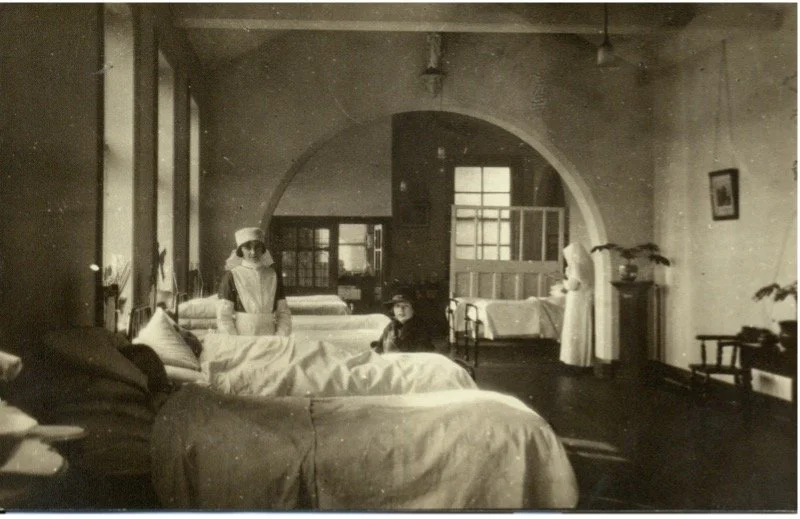
The old Lourdes Hospital, Liverpool, c.1932
The other presentations given on the day comprised a biographical study of the prominent Catholic philanthropist, Francis Joseph Sloane (1794-1871), by Lucia Luck; a study of the Georgian Anglican prelate Jacques Sterne, and his troubled relationship with the Bar Convent community, by Daniel Reed; and last but certainly not least, an account by Sr Patricia Harriss CJ of the imminent merging of the Irish and English constituents of Sr Mary Ward’s congregation into a single entity. In an extraordinarily varied life of service, Sr Patricia made many contributions to the heritage collections at the Bar Convent, including the translation of documents from German into English. It was sad subsequently to read of her death, which took place only a few months after the conference, at the ripe old age of 92. But it may truly be said that in rest, her works will follow her, and she had the satisfaction of knowing that her prayers for the unity of Sr Mary Ward’s institute had now been answered.
Paul Shaw
Picture of Sr Mary Ward courtesy of Wikimedia Commons.
Photograph of the Bar Convent by The Bar Convent from Wikimedia Commons, reproduced under Creative CommonsAttribution 4.0 International.
Photograph of the Arma Christi reproduced courtesy of the Bar Convent Living Heritage Centre.