
Feast of St Mary Magdalene 22nd July
In 2016, Pope Francis elevated the liturgical status of St. Mary Magdalen from an obligatory memorial to a feast on the General Roman Calendar. The reasons given for the upgrade were St. Mary Magdalen is a witness of the transforming power of Divine Mercy, a model of the indispensable service and dignity of women in the Church, and an epitome of evangelization.
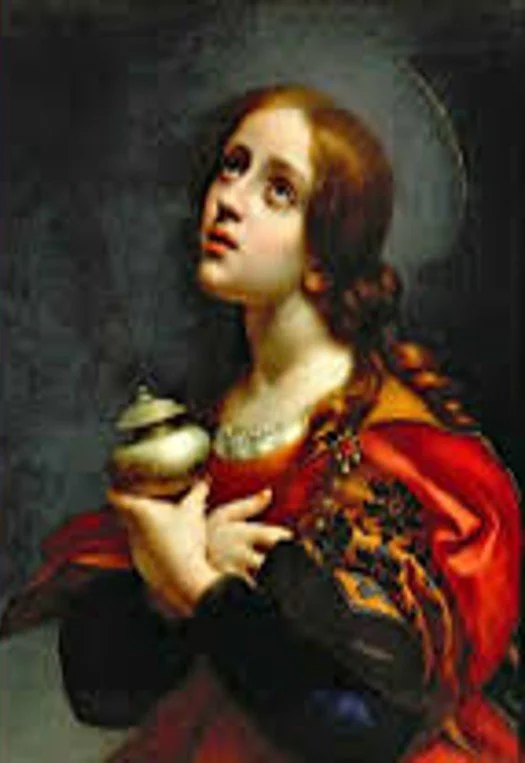
St. Luke tells us that, after having received Christ’s mercy, she was one of several women “who had been cured of evil spirits and infirmities,” who faithfully accompanied Jesus and the apostles during his journeys and “provided for them out of their resources.” (Lk 8:2-3) Mary knew she had been saved and healed. And that’s an experience all of us should begin with if we’re going to imitate her.
St. Mary Magdalen shows us the dignity of women in God’s plan of salvation, caring for the Lord and the Church, sharing in his mission, hearing his teaching, seeing his deeds. Her care for Christ and his mission is a model for every disciple. She loved Jesus, whose mercy transformed her life, and consecrated her life to him and his redeeming work. She shows us the joy of the Resurrection and how to share the Good News of the Resurrection with others. On Easter
morning, she came to the tomb to anoint Jesus’ dead body. She was seeking him. She was lost without his guidance. When she didn’t find His body, she wept at His absence. She sought Him so much that she wanted to be with Him even if it would just be his corpse. That’s when Jesus revealed himself to her, calling her by name. She was the first person to whom the Risen Jesus appeared and she was sent as the first witness of the Resurrection to the apostles who were hovering in the Upper Room. Her message was, “I have seen the Lord.”
God wants all of us to proclaim the “living Christ,” to announce that Christ is alive, that, like Mary Magdalen, “I have seen him,” but also, “I have heard him speaking to me in prayer and the Word of God.”